
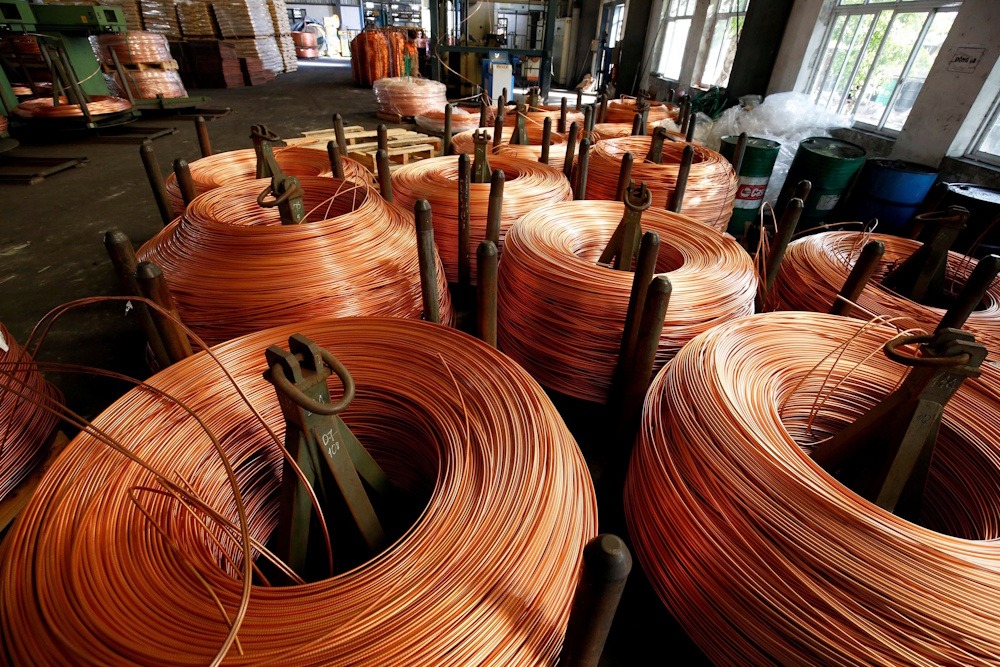
Copper prices maintained their robust upward trajectory, closing 0.54% higher at Rs 1,292.5, driven by supply-side disruptions and anticipations of persistently increasing demand stemming from the AI boom and the global energy transition, which bolstered market sentiment. The tightening of physical availability is evident in the Yangshan copper premium, which is concluding the year close to $51 per tonne after reaching a three-month peak of $55. This indicates a robust buying interest, even in the face of high prices.
Demand in China has exhibited greater resilience than previously expected, with cumulative imports for January–November declining by merely 3% year-on-year. Chilean copper production experienced a year-on-year decrease of 7.18% in November. Concurrently, disruptions at Freeport-McMoRan’s Grasberg mine in Indonesia, along with escalating labor unrest risks in both Chile and Peru, have heightened apprehensions regarding mine supply.
Renewed US tariff threats have introduced additional uncertainty, leading to refined copper flows being redirected toward US warehouses, thereby constraining availability in conventional consuming regions. Despite the ICSG’s report of a refined copper surplus of approximately 122,000 tonnes during the initial ten months of 2025, apparent usage experienced a 5.5% increase, highlighting strong underlying demand. The anticipation of a 10% reduction in output by leading Chinese smelters in 2026 reinforces a more constrained perspective.
The market is currently experiencing short covering, evidenced by a 0.83% decrease in open interest to 13,310, alongside a price increase of Rs 7. Copper exhibits immediate support at Rs 1,273.5, while a more pronounced downside is observed at Rs 1,254.4. Resistance is identified at Rs 1,303.2, and a persistent advance beyond this threshold may drive prices toward Rs 1,313.8.