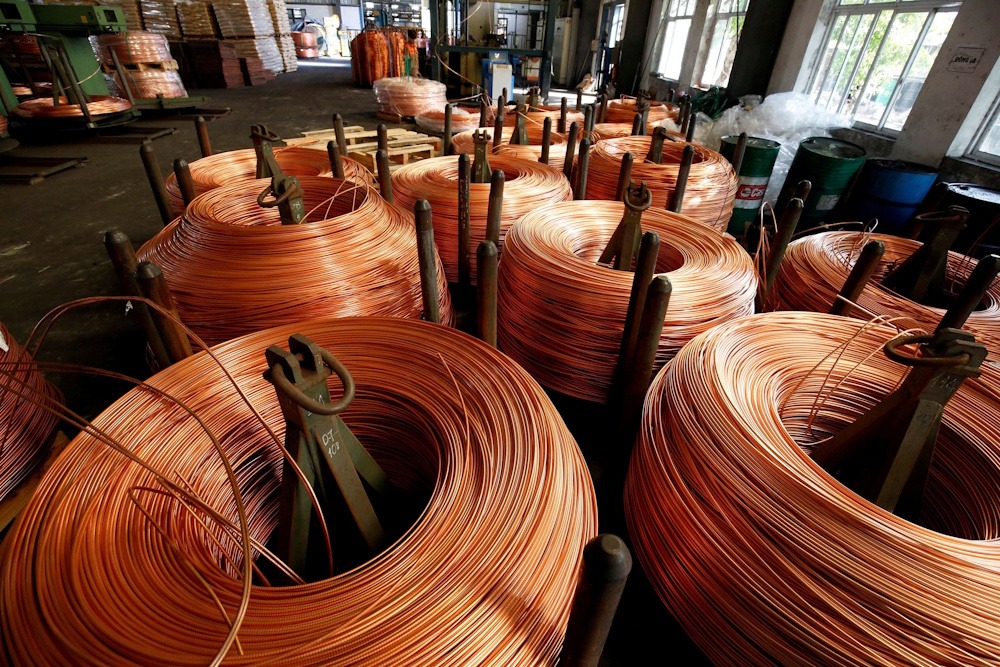
Copper yesterday settled down by -0.88% at Rs 1339.3 as a rout in technology stocks battered broader markets, driven further by Democratic wins in the US midterms that fuelled concerns over potential new regulatory oversight capping the artificial intelligence buildout. Despite this macro headwind, persistent supply constraints cushioned the downside, as evidenced by the closely monitored Yangshan copper premium rising to $210 a tonne, marking its joint highest level since Shanghai Metal Markets began tracking it in 2012. This increase coincided with a 24.1% decline in warehouse inventories monitored by the Shanghai Futures Exchange from the previous Friday. In September, US copper imports experienced a decline of 3.1% from August, totalling 194,284 metric tonnes of refined copper and copper alloys. This figure represents a decrease from 200,519 tonnes in August and a peak of 225,094 tonnes in July.
However, it is noteworthy that imports remained nearly double the levels observed a year prior, as the metal continued to enter the market in anticipation of potential tariffs. Meanwhile, the People’s Bank of China announced an increase in the foreign exchange reserve requirement ratio for financial institutions by 2 percentage points, raising it to 6% from 4%, effective November 15. This move aims to tighten dollar liquidity and moderate the recent appreciation of the yuan. On the fundamental front, the global refined copper market experienced a surplus of 132,000 metric tonnes in August, a notable shift from the 45,000 metric tonnes deficit recorded in July, as reported by the International Copper Study Group. This development brings the cumulative surplus for the first eight months of the year to 218,000 metric tonnes, compared to 158,000 metric tonnes during the same period last year. In August, world refined output stood at 2.47 million metric tonnes, while consumption was at 2.34 million metric tonnes.
The ICSG further projected the global market surplus to widen from approximately 104,000 metric tonnes in 2026 to 368,000 metric tonnes in 2027, anticipating world refined production to increase by 0.4% in 2026 and 3.4% in 2027, driven by smelter ramp-ups in Indonesia, India, and the EU. Meanwhile, apparent usage is expected to grow by 1.5% in 2026 and 2.5% in 2027, supported by energy transition, urbanisation, digitalisation, and semiconductor development. In September, China’s copper imports experienced a notable increase of 20.7% month-on-month, reaching a total of 461,000 tonnes. Spot market tightness was highlighted by Chilean output data indicating that July production at state miner Codelco decreased by 5% year-on-year to 112,800 metric tonnes amid ongoing operational challenges. Meanwhile, BHP-controlled Escondida experienced a significant decline of 22.1% to 89,400 tonnes, while Collahuasi saw an increase of 12.3% to 38,400 tonnes.
Overall, Chilean production fell by 9.4% due to severe weather conditions in the north and maintenance activities. This situation led Chile’s copper commission Cochilco to substantially revise its 2026 output forecast downward, expect a milder-than-anticipated recovery in 2027, and adjust average price forecasts to $6.18 per pound in 2026 and $5.95 per pound in 2027. From a technical perspective, the market is experiencing new selling pressure, as open interest increased by 0.27% to reach 7345, while prices declined by Rs 11.85. Immediate support is established at Rs 1328.50, with a potential breach leading to tests around Rs 1317.50. Resistance is anticipated near Rs 1349.00, and a breakout above this level could result in prices approaching Rs 1359.00.