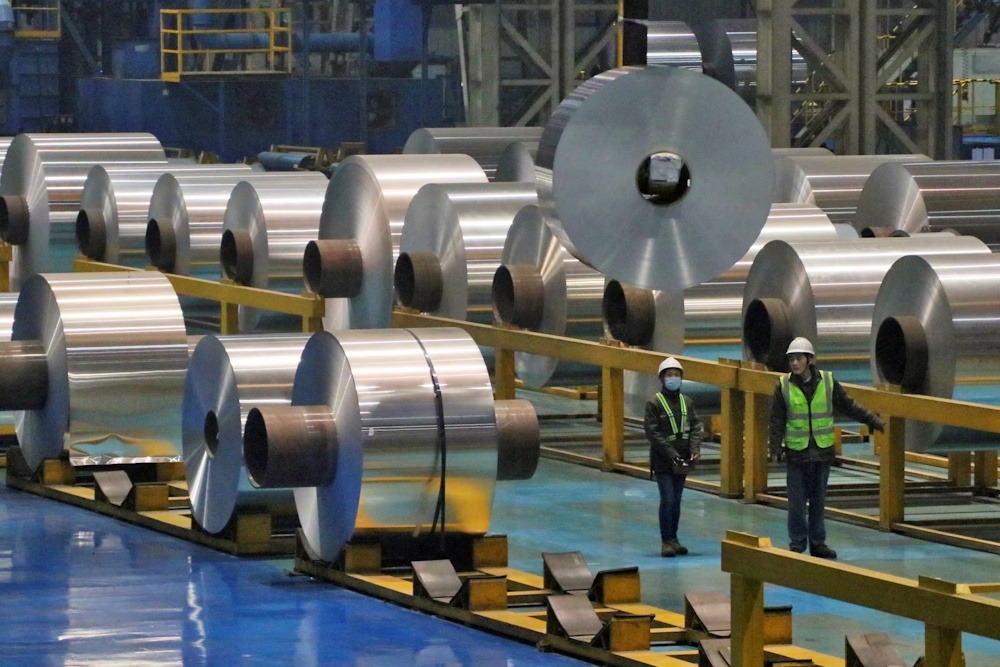
Aluminium concluded the trading session with a decline of 1.11%, settling at Rs 347.05. This downturn was primarily driven by robust production figures from China and diminishing worries regarding supply from the Gulf, which overshadowed the support provided by critically low LME inventories and persistent supply disruptions. China’s aluminium production experienced a year-on-year increase of 3.8%, reaching 3.9 million tonnes in July. Concurrently, exports of unwrought aluminium and aluminium semis saw a significant rise of 18.6% year-on-year, totalling 643,000 tonnes, despite a month-on-month decline of 9.6%. Cumulative exports during January-July reached 4.04 million tonnes, reflecting a 16.7% increase year-on-year, underscoring China’s expanding influence in alleviating global supply shortages.
LME aluminium inventories have persisted in their downward trajectory, reaching their lowest point since 1990, a trend that underscores the supply-chain disruptions instigated by the Iran conflict. However, supply concerns have diminished as Emirates Global Aluminium’s Al Taweelah smelter, presently functioning at 18% capacity, is anticipated to revert to prior output levels by early 2027. Australia’s largest aluminium smelter has also obtained a $1.8 billion government bailout, facilitating the continuation of its operations. Norsk Hydro’s Alunorte alumina refinery in Brazil has curtailed its output to 50% of capacity as a result of diminished natural gas availability. Concurrently, Alcoa has revised its 2026 alumina production guidance downward by 200,000-300,000 tonnes, now projecting a total of 9.5-9.6 million tonnes, following disruptions caused by a cyclone and bauxite contamination in Western Australia.
Global primary aluminium production experienced a year-on-year decline of 1.5%, totalling 5.98 million tonnes in June. Notably, output from the Gulf region decreased by one-third, and production outside of China saw a significant drop of 6.7% in July. European physical premiums have decreased to $487 per tonne from $621 in May, yet they remain 36% higher than the levels observed at the onset of the war, suggesting persistent supply constraints. China’s semi-manufactured aluminium exports exhibited robust performance, increasing by 15% in the first half of 2026 following a rebound from the elimination of tax rebates.
Softer U.S. employment data and diminishing expectations for Fed rate hikes offered a degree of macroeconomic support. Aluminium is currently experiencing long liquidation, as evidenced by a 7.11% decline in open interest, which now stands at 3,686 contracts, alongside a price decrease of Rs 3.9. Support is positioned at Rs 344.8, beneath which prices may approach Rs 342.5. Conversely, resistance is identified at Rs 350.7; a sustained advance beyond this threshold could drive prices toward Rs 354.3.